Trying to navigate San Francisco can feel a lot like trying to navigate through David Bowie’s Labyrinth. Though whenever I do it, there are fewer goblins and I’m usually in tighter pants. When I first moved to the city, I found its infrastructure to be quite chaotic and confusing, even with GPS! While San Francisco is revered as one of the most bike-friendly cities in the country, the topography of the landscape paired with its maze-like one-way streets and select bike lanes can make getting around a bit of a challenge. The city boasts some particularly pleasant rides through Golden Gate Park, Ocean Beach, as well as the Presidio, but getting to these hot spots can be a bit daunting, especially for folks who are new to city commuting. From your cozy Victorian home, you strap on your helmet, clip into your steed, and enter… the labyrinth.
The Good
As you jump from neighborhood to neighborhood on your journey, you might find yourself on a nice lime green patch of a painted bike lane. Oh so pleasant, especially when the glass and rubble are all brushed away. They act as the main highways for every type of commuter in the city and during peak commuting times it’s like a buzzing, traveling ecosystem of pedal-destrians and moto-scooter folk. One section of bike lane in particular that I have come to know and love takes you from Market Street to Golden Gate Park. This route, known as ‘The Wiggle’, is one of the safest bike routes in San Francisco and also the most fun. The Wiggle is a flat and visibly marked route, making it easy for all commuters to use, and most turns are guarded by a four-way stop, making it a safe San Francisco bike route.
A Map of the Wiggle
Advertisements
Because of the route’s popularity, you’ll find no shortage of cafes, restaurants, and bars along the way (some are not shown in the map), and if you run into any bike trouble, Wiggle Bicycles, located on Waller St. is equipped with service techs to help you with any repairs. The bike lanes that make up the wiggle consist of shared road lanes on the quieter streets and protected bike lanes (with a divider in between you and traffic) on the busier roads.
The bike lane alongside the panhandle is usually separated by a line of parked cars, which can potentially put pedestrians or car doors into the bike path — meaning some careful attention should be paid on this stretch.
A map of the 7.7-mile Golden Gate Loop
Once you cross over Stanyan St. and into Golden Gate Park, you are free to enjoy the 7.7-mile-long stretch of mixed-traffic roads. The beginning 1.5-mile stretch of road along JFK Drive is permanently car-free and is filled with art installations, live music, and seating which can provide a unique experience to any weekend outing. The popular stretch of road is usually packed with runners, walkers, and cyclists, but always navigable. My favorite spot in the park is the San Francisco Botanical Garden which boasts more than 8,000 plant species spread across 55 acres of beautifully tended land and is free for San Francisco residents! Some other interesting finds I’ve rolled past frequently along the route are public outdoor pianos, ping pong tables, roller skating pads, and swing dance lessons.
TheNot So Good
City planners thought it would be a good idea to model San Francisco after New York and its successful grid system. It makes the city a lot easier to navigate that way, but they didn’t account for the hills. That makes for some steep roads, some hovering around 31%! According to an unofficial survey the steepest road in San Francisco has a gradient of 41% percent over 30 feet going up Bradford St. Thankfully the planners decided to opt out of putting bike lanes on these roads.
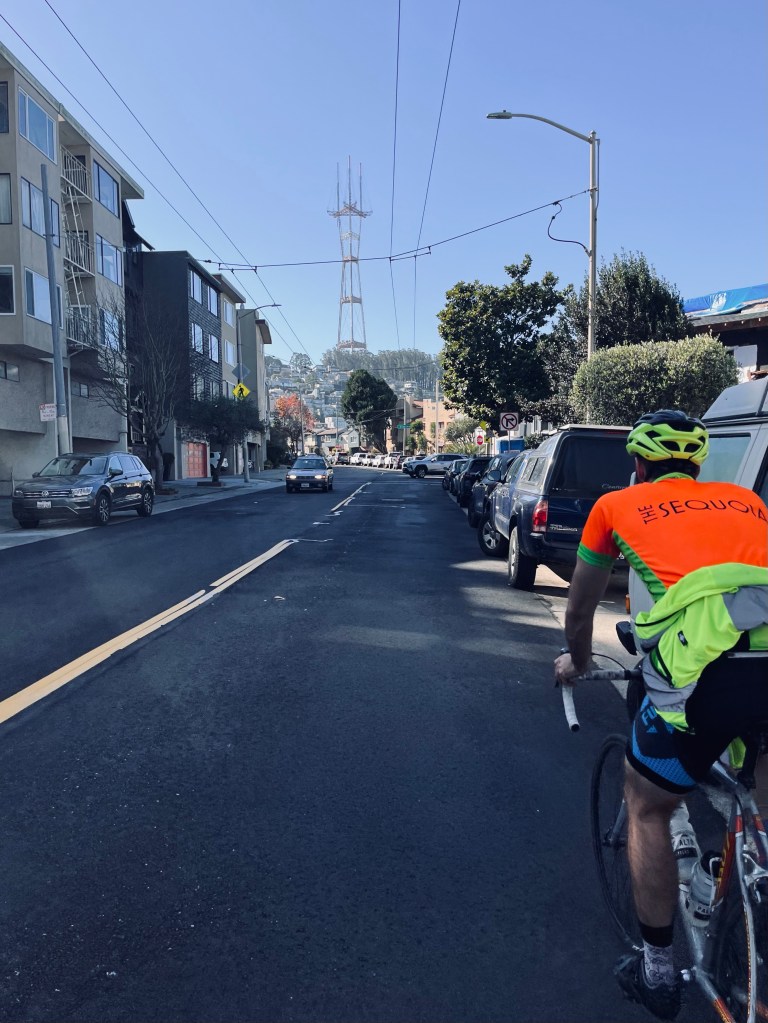
If navigating the hills isn’t enough of a challenge, then dealing with the cars might be another story. Commuting in the city does have inherent danger when bouncing around the traffic. The safest way to ride your bike through San Francisco is to make yourself as visible as possible. Wear high-vis reflective gear, attach bright flashing daytime/nighttime front and rear lights to yourbike, and make sure they’re on – always. I can already hear some of the roadies who prefer to ride minimally groaning. Just do yourself and the drivers around you a favor, sacrifice the extra grams, wear a light and avoid an accident!
Sometimes you gotta ride aggressively to avoid getting yourself hurt.
Scan the road ahead of you as you ride. The designated lanes can be hazardous — filled with glass, cars, pedestrians, and potholes. Check your surroundings then take the lane if you have to. Avoid putting yourself, your bike, or another person in danger!
Advertisements
Riding aggressively means keeping your attention focused on the path your wheels are taking (known as your ‘line’), while also being aware of and responding appropriately and confidently to your immediate surrounding. I use the word aggressive because to ride oppositely — leisurely or carefree, would indicate that less attention is paid to the immediate dangers that are inherent while commuting in any city. This manner of riding should be used when in the thick of highly trafficked areas of town — keeping in mind that cars often don’t and won’t expect you to be where you are. Once you reach quieter bike paths or routes completely separated from traffic, you can ease yourself up a bit and enjoy the ride.
The last thorn in the collective cycling chamois is when drivers like to use the bike lane as their “I’m special” parking spot. You might be tempted to give ’em a little love tap as you pass by or a friendly bird, but keep in mind that you represent all who ride on two wheels. A negative interaction with someone can encourage them to solidify their opinion of you or whatever they can identify you as. Instead of reacting in an equally opposite way, pass them safely and enjoy your ride. Be kind to your fellow cyclists, say hello, announce that you’re passing, give a smile and a nod, or even a little two-finger wave will do. Let’s all try to be good role models for the biking community!


 Pedal the Bay
Leave a comment